
John Russell (Jack) Vadnais and Beverly Ann (Bev) Wallerick (part 1)
My father, John Russell (Jack) Vadnais, was the 9th of 12 children born to Adlore and Ellen Vadnais. Adlore was 35 years old and Ellen was 36 years old. Jack was born on February 19, 1925 in the family home at 1309 (now 1972) Fourth Street, White Bear Lake.1 Specifically, he was born in the only bedroom located on the main floor of the house, in the northwest corner. Jack’s first cousin, 17 year old Marie Rose (Mildred) LaBore, assisted with his birth.
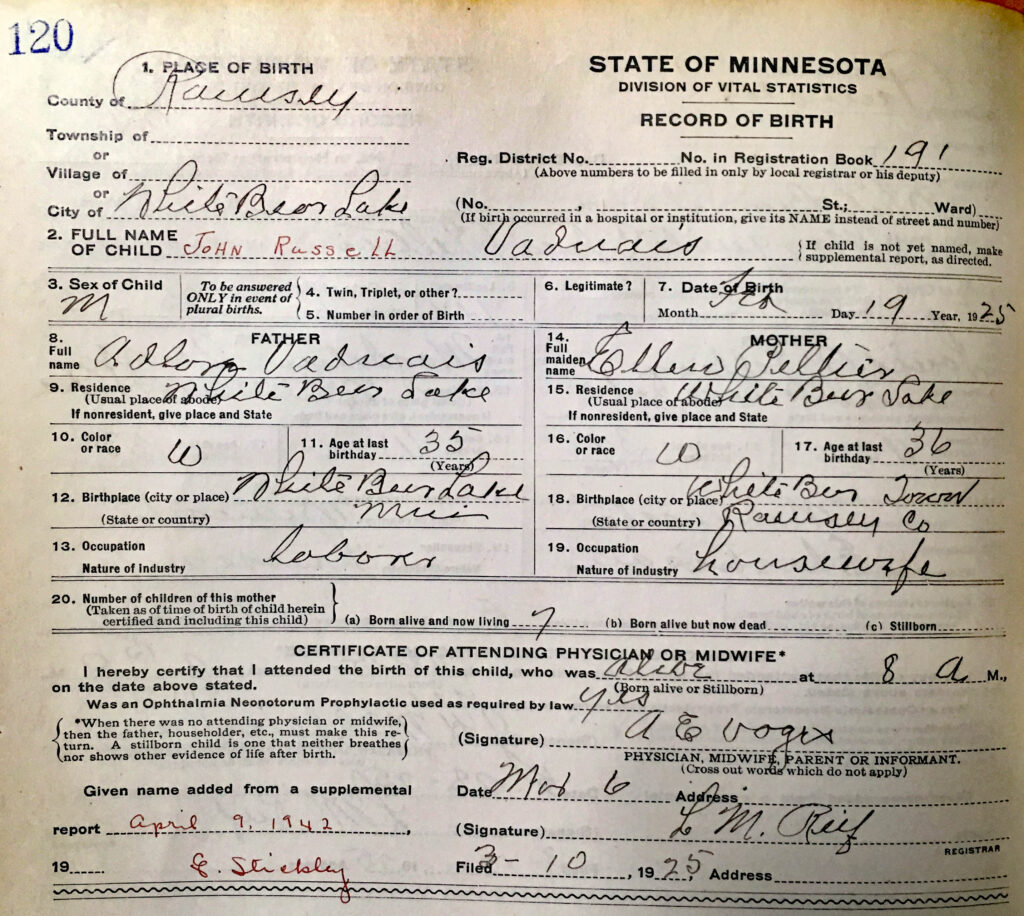
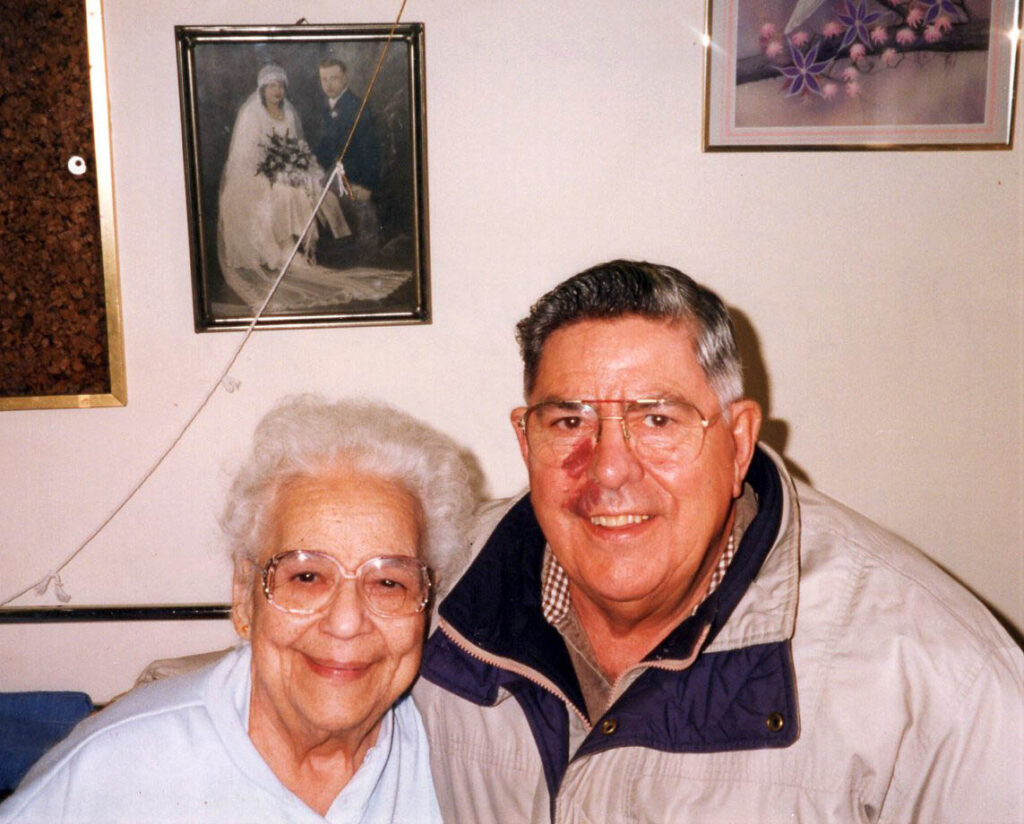
When Jack was born, his siblings included 14 year old George, 13 year old Charles (who at the time, would have been away at the Minnesota School for the Deaf), 9 year old Florence, 5 year old Dick, 3 year old Mona and almost 2 year old Leona. His brothers, Lawrence and Henry, had both passed away some years earlier.
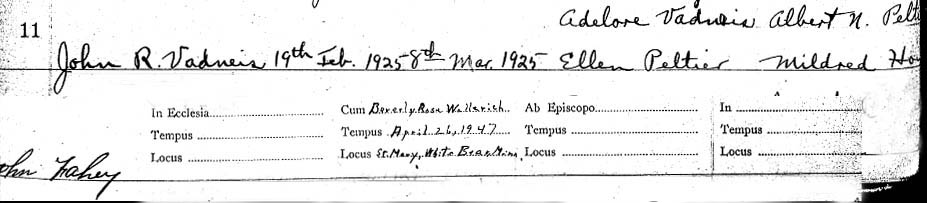
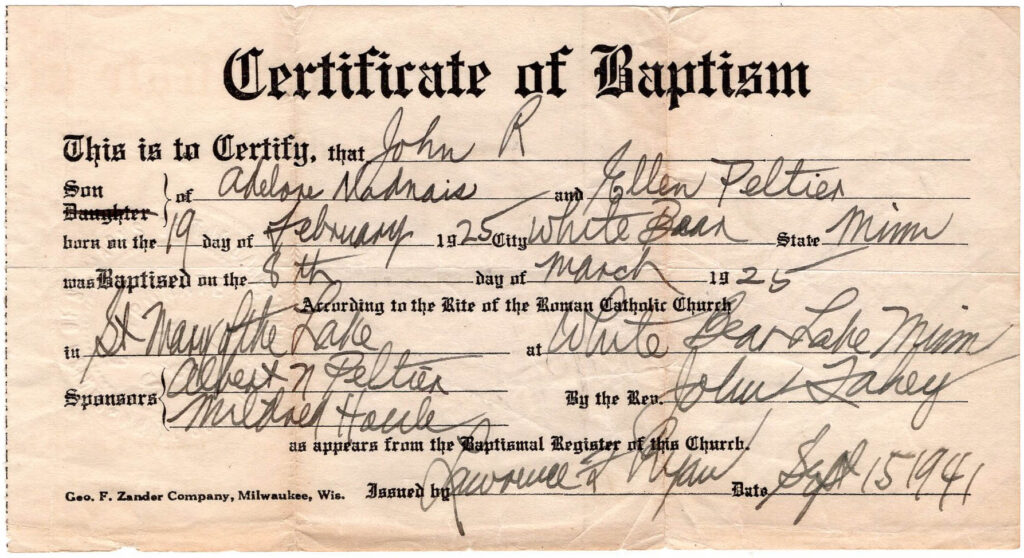
On March 8, 1925, Jack was baptized at St. Mary of the Lake Catholic Church in White Bear Lake by Father John Fahey.2 His godparents are listed on the record as his uncle, Albert (Bert) Noah Peltier and Mildred Houle, a first cousin once removed.
Jack wrote in his memoirs about life in the family home on Fourth Street saying that,
“We lived in a one and a half story home with a kitchen, front room, bedroom and a porch. The second floor had two bedrooms and a small sun porch. My five sisters slept in one bedroom. My older brother had his own separate room. Charles was away at a school for the deaf in Faribault. Three of us brothers [Jack, Dick and Gordy] slept in the sun porch, which was large enough for one bed.
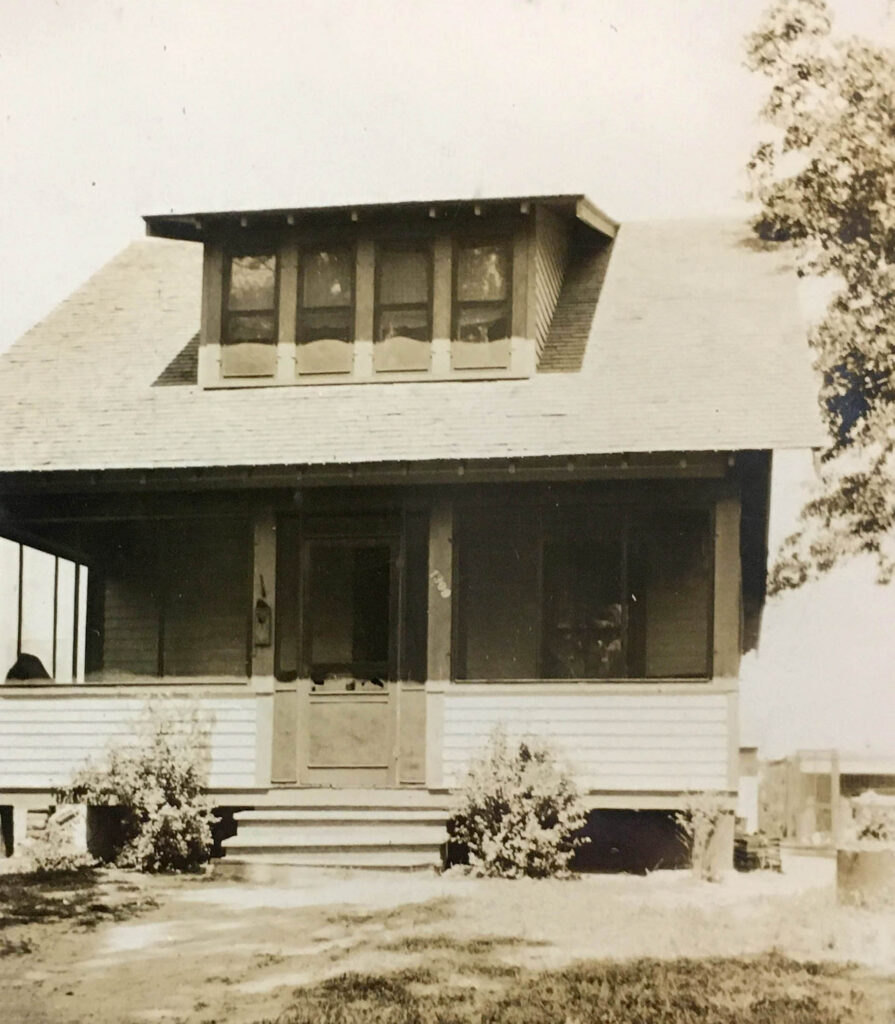
The sun porch is where the 4 upper windows are located.
The heating of our home was with a pot-bellied stove located in the front room and a wood burning cooking stove in the kitchen. Railroad ties were used for fuel in both stoves. The ties were used and discarded by the railroad. We had mountains of them stacked in the backyard by the time fall would roll around. The saw we used to cut them down to size was called a luger. It had a blade approximately two feet in diameter and was run by gas. [I suspect that it was the Waterloo Boy engine (Waterloo Boy eventually became John Deere) hooked up to a large circular saw blade. It was one of the pieces of property Adlore got when he became the sole owner of White Bear Oil Company.] My older brothers and father would cut the ties into stove size pieces. The stoves would be stoked up before bed, but by many a morning they would be nearly cold.
One morning when I was about five years old, the temperature in the house was extremely cold. We had no heating on the second story except that which came through the vents in the floor. This particular morning, I grabbed my underwear in one hand and headed downstairs. My mother was already getting breakfast and baking bread in the stove. Bread had to be made every day and on Saturday, cinnamon rolls and baked beans were on the menu. To warm up quickly I ran into the kitchen and sat down on the warm oven door which mother had just opened! Boy, oh boy! I really burned my bottom!”
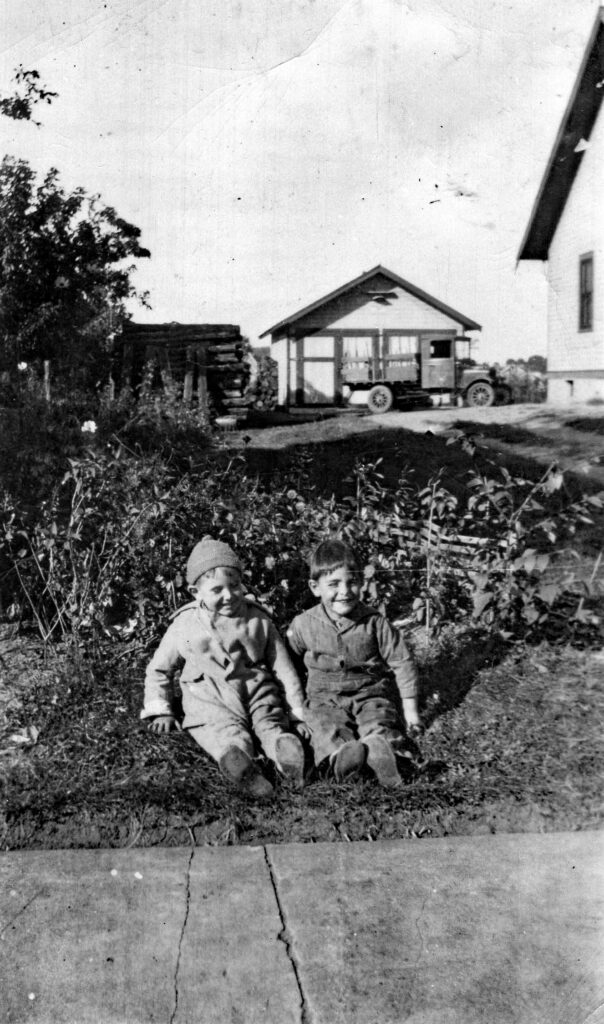
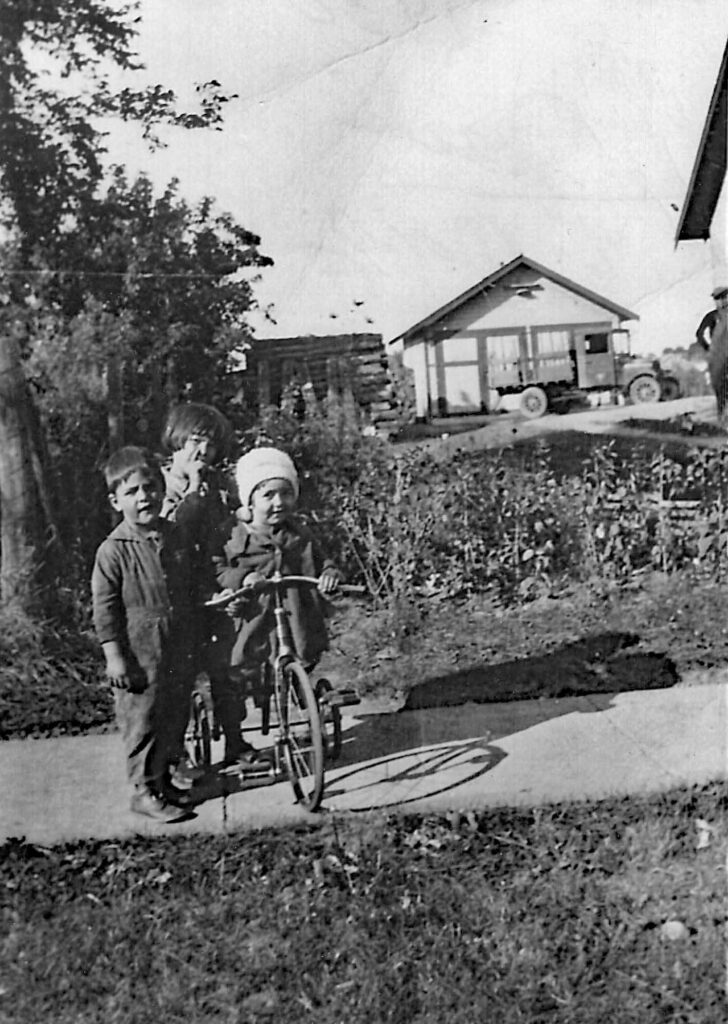
I think Adlore is standing off to the right.
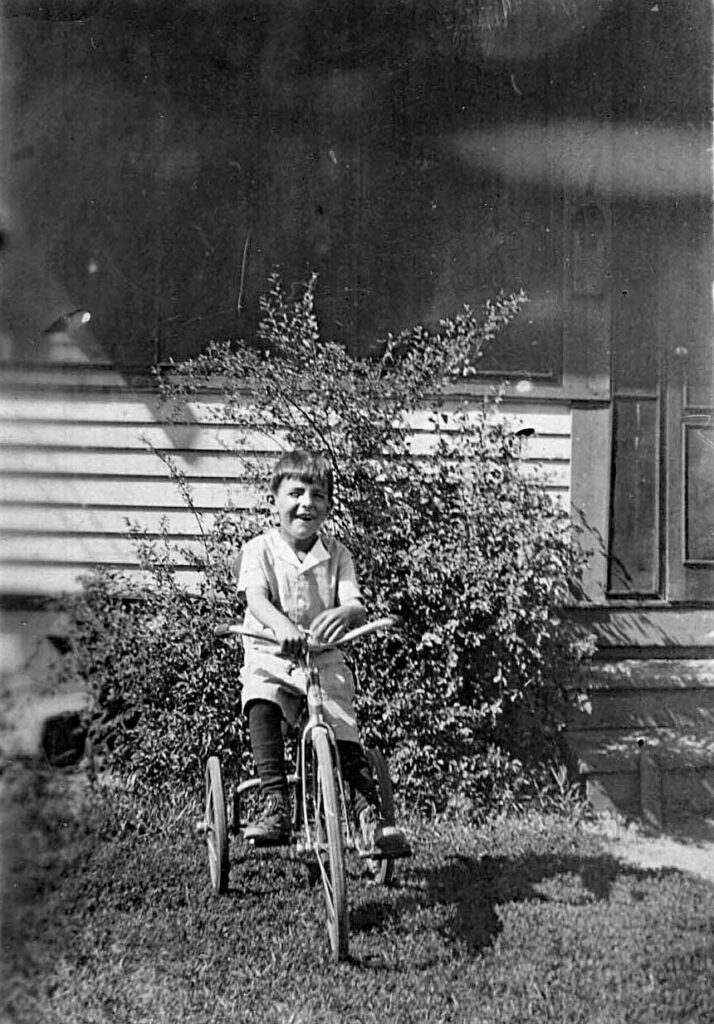
Jack further wrote,
“We had an outhouse in the backyard; most of the time we used catalogs for toilet tissue. On Halloween it was a great fun prank to tip over the outhouses. Some Halloweens the joke would be on us, for the outhouse owners would remove the houses before we got there.
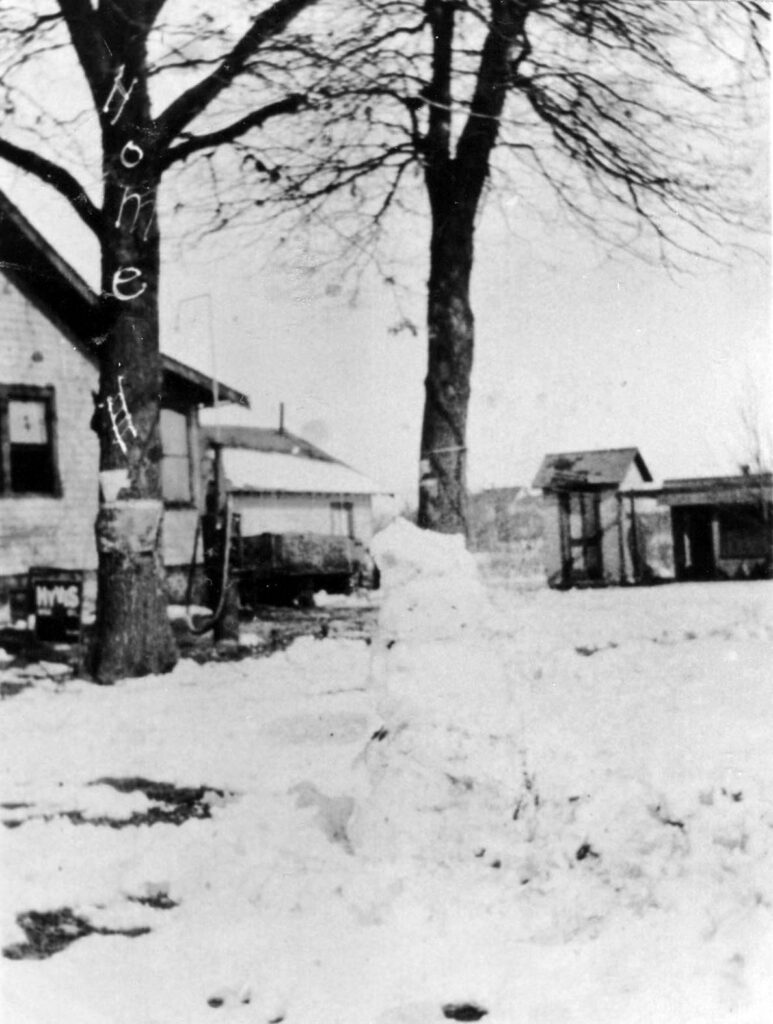
In the late winter, a butchered pig was put on the front porch. It was always covered up with a sheet. When meat was needed, my mother would take a meat saw and cut what was required for supper.
I believe I came by the nickname of Jack from Tony Buchal. He brought in large amounts of potatoes by the truckload, which was put in the dirt floor basement of our house, enough to last the entire winter.
At 5 years old I had a ruptured appendix and they gave me 1 hour to live; I fooled them all. One day Sam Hane stopped at the house to buy gas (my mother had a gas pump along side of the house). Sam asked how I was; my mother said I was not good; about that time I came out of the house with a tube hanging from my side.
Our shoes came from a shoe barrel under the upstairs steps. When we needed a new pair of shoes, we would go the shoe barrel and get a pair.
In the summer time games like Annie, Annie Over would be played. We would throw a ball over the garage for the other team to catch. We would play other games like cops and robbers, too. Our guns were made out of apple box ends, with cut rubber binders fitted over the ends. We were then able to shoot the binders at one another. There was always a game of softball going on. Both boys and girls would participate in these games. Marble games were played where the kids with the “good” shooter cleaned up in the game of “for keeps.” The winner of that game got to keep the loser’s marbles. Even old tires were quite the novelty. We’d have a great time rolling them up and down the street.”
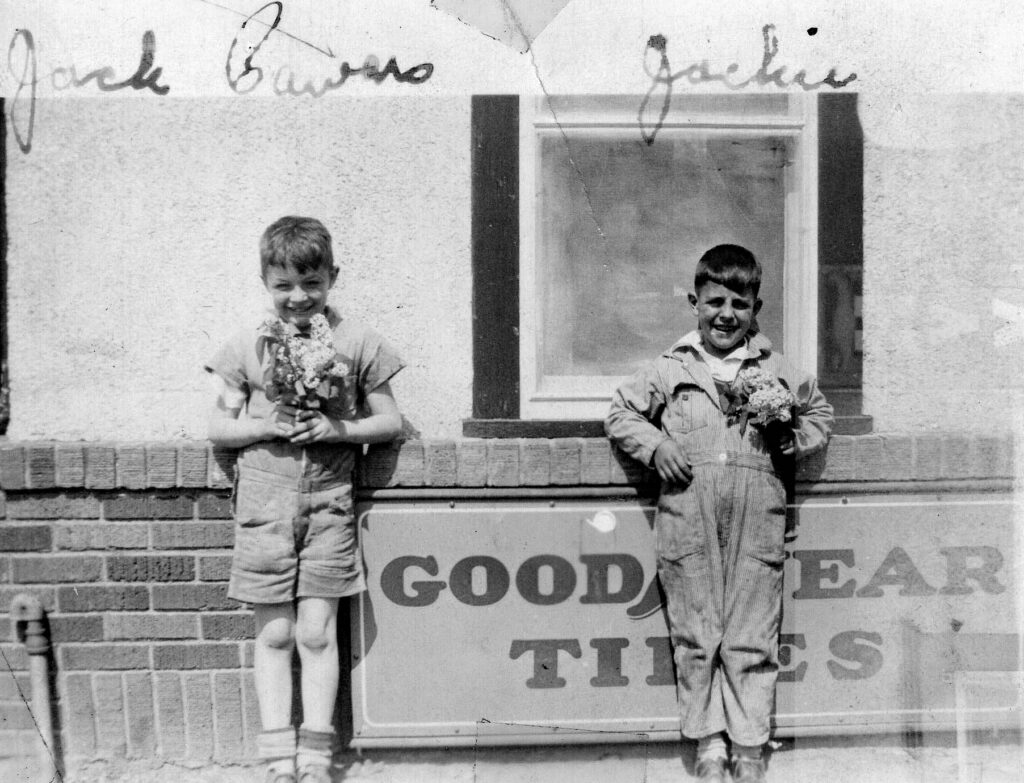
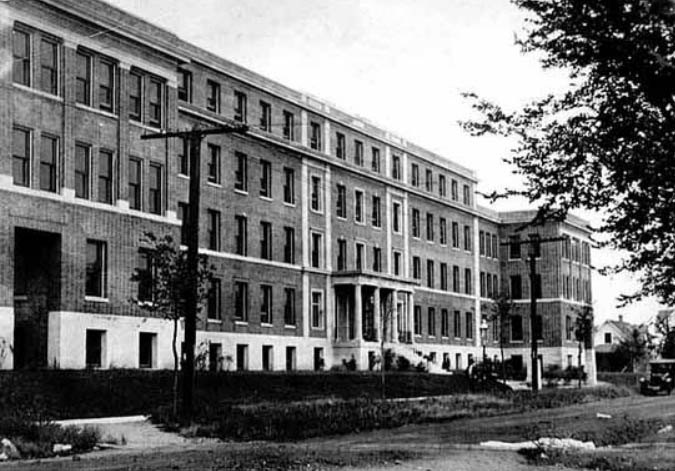
It’s true that in 1930, when Jack was 5 years old, his appendix ruptured. Jack’s father Adlore was working as a yard clerk for the railroad, so Jack was taken to the N. P. B. A. (Northern Pacific Beneficial Association) Hospital located at 1515 Charles Avenue in St. Paul.4
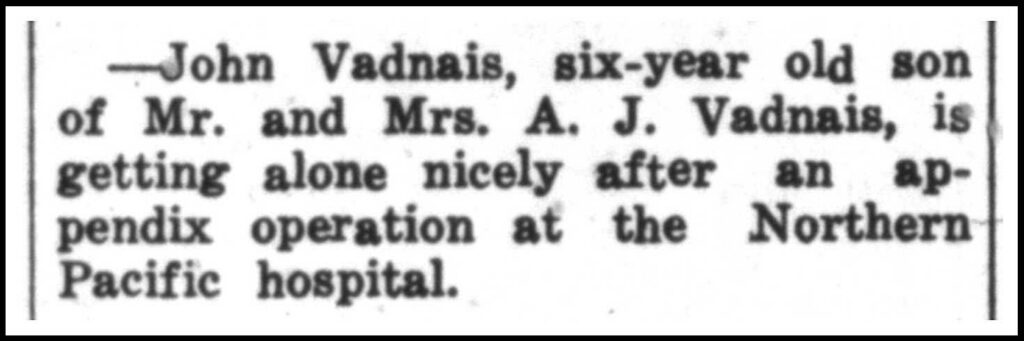
(Jack was 5 years old, not 6)
In his youth, Jack spent a lot of his free time during the summer at his Grandma Peltier’s house on Koehler Road. She is the person that told him of the island in Canada that our family once owned. (Anticosti Island owned by my 9th great-grandfather, Louis Jolliet, the explorer).
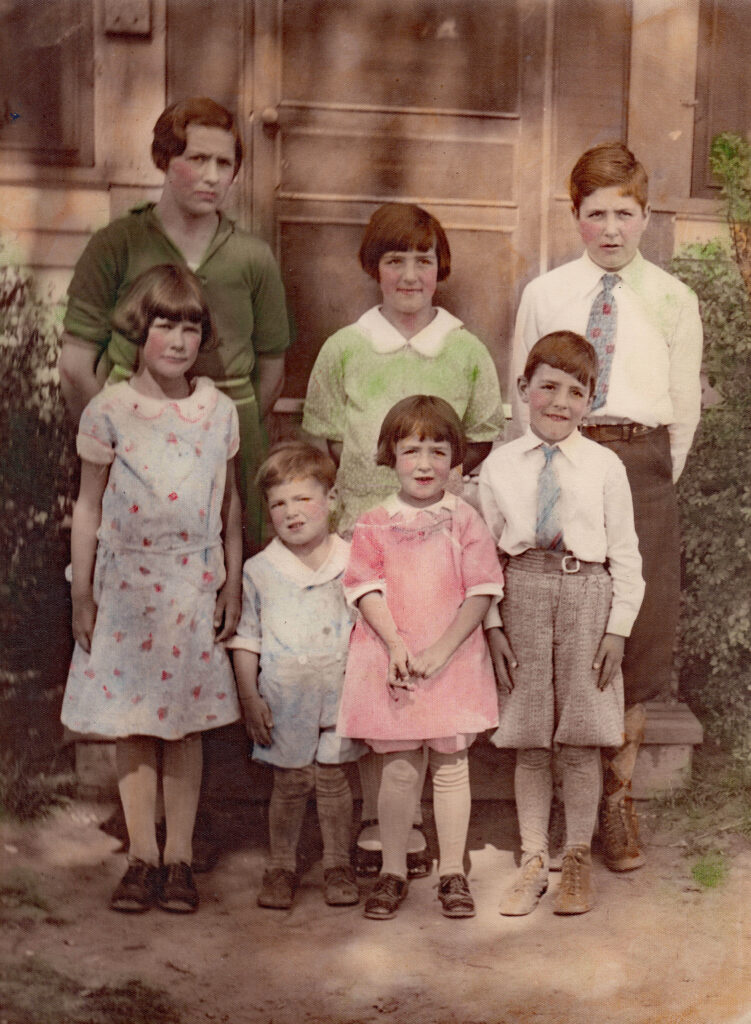
Back row left to right: Florence, Mona and Richard (Dick)
Front row left to right: Leona, Gordon (Gordy), Marguerite and John (Jack)
This was probably taken right around the time the youngest of the children, Anna Mae, was born.
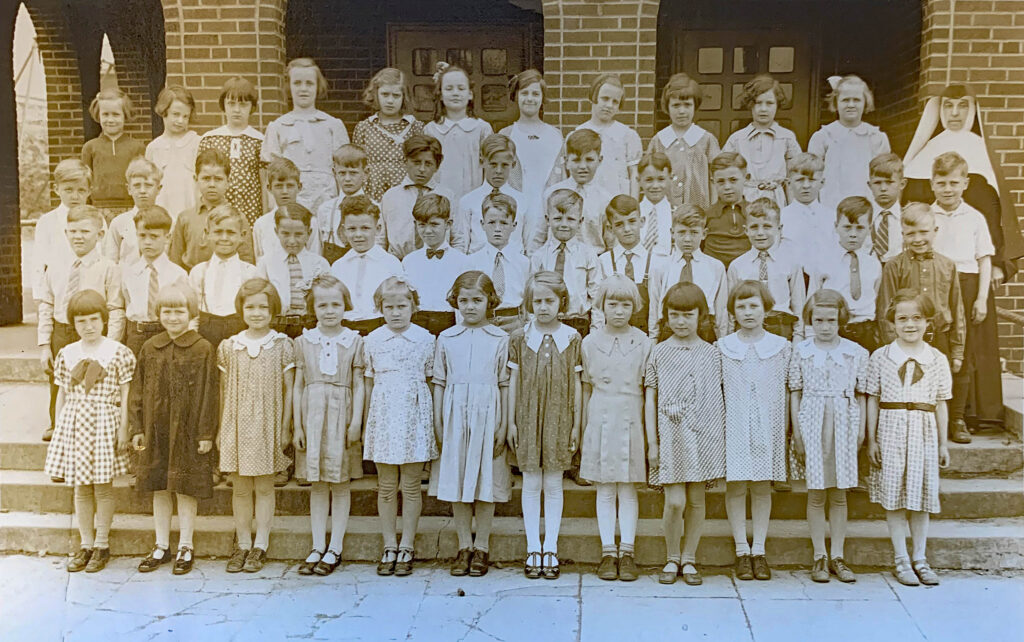
Jack started his education at St. Mary’s School in September 1932. He joined his sisters, Mona and Leona, who had already been attending St. Mary’s for a number of years. Because of his illness in the summer of 1930, Jack had been held back one year.
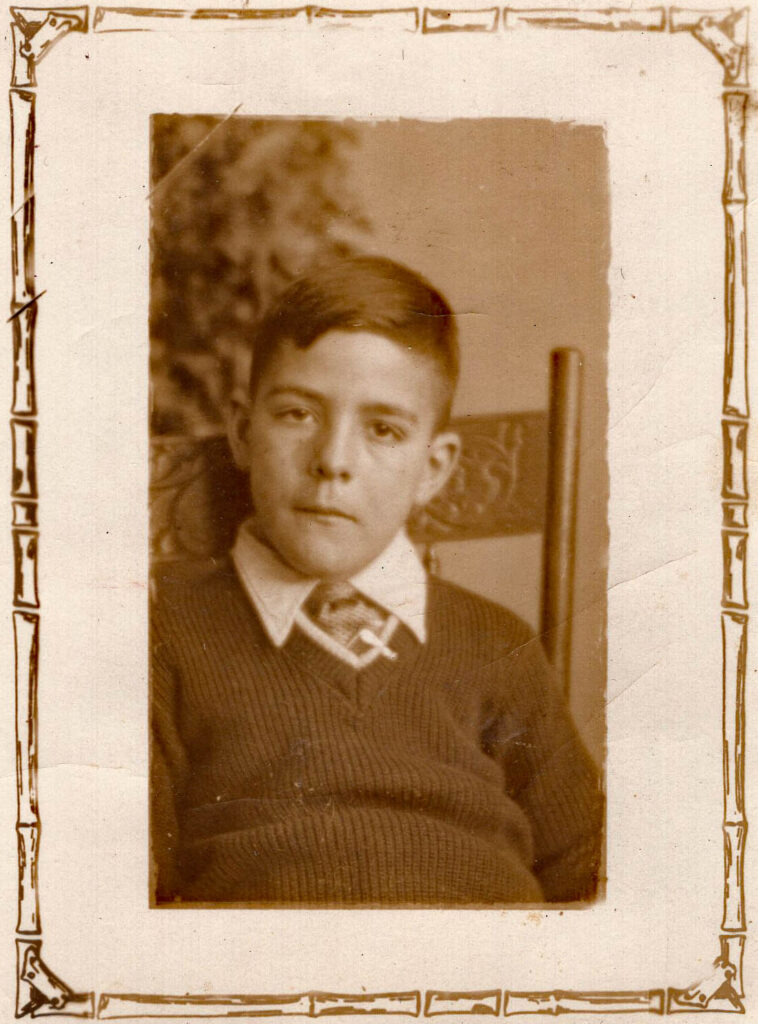
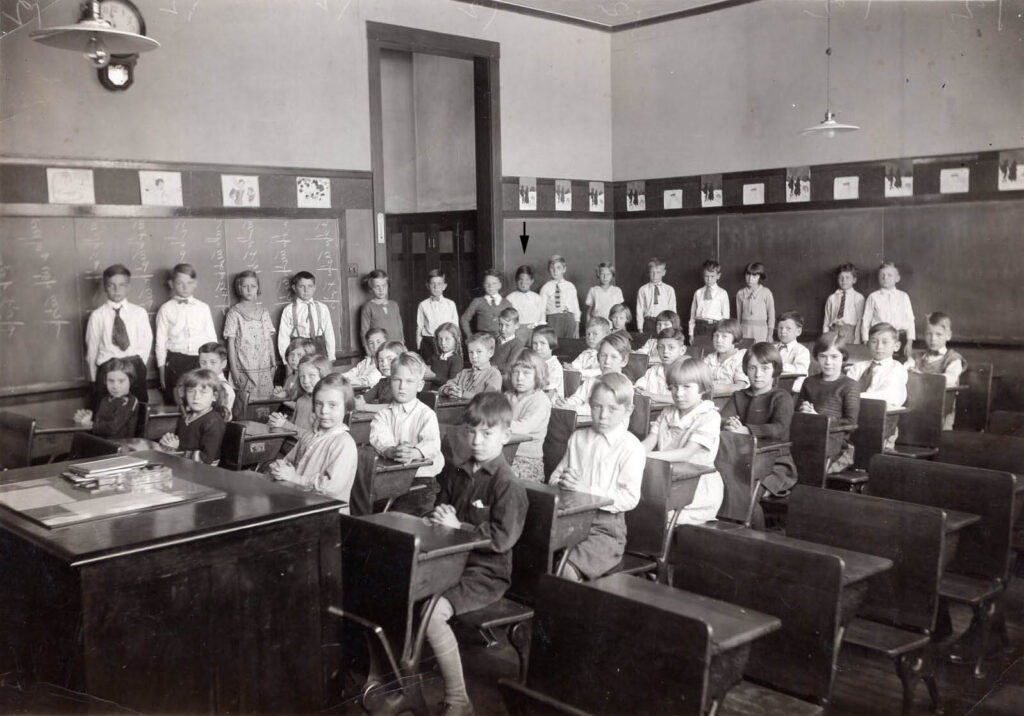
The arrow to the right of the doorway to the coatroom is pointing at Jack.
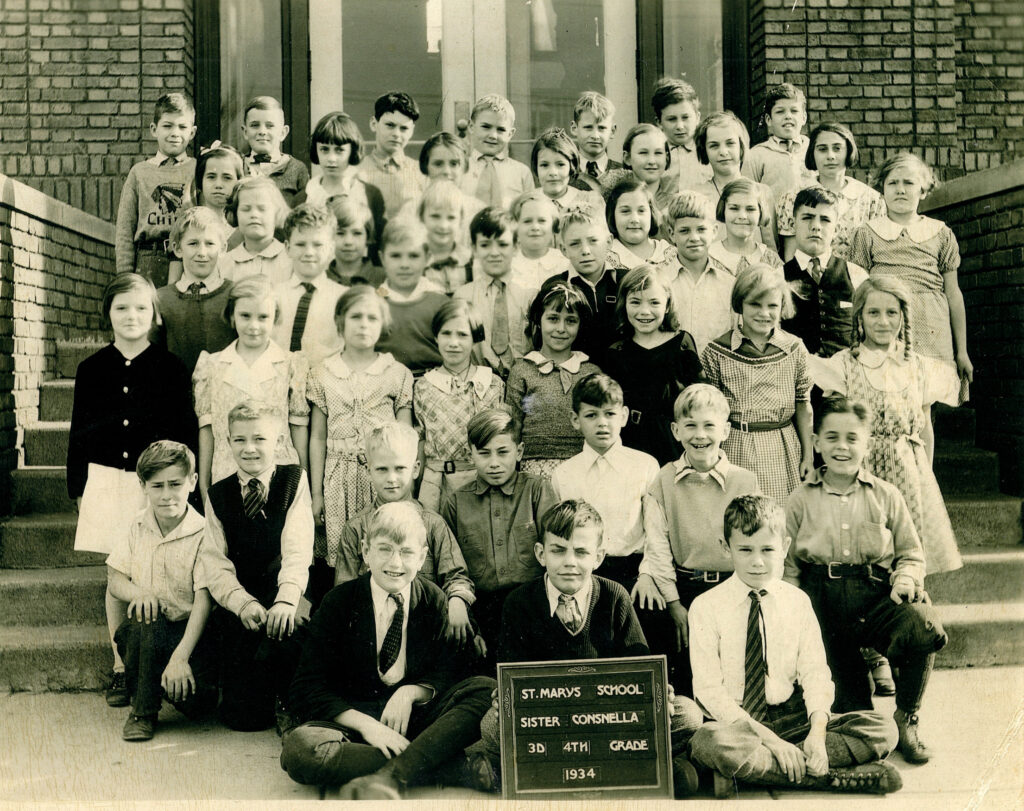
Jack is on the right in the 4th row back from the front.
Sometime around 1934, the family moved from their home at 1309 Fourth Street to 411 (now 4787) Bald Eagle Avenue. The new house on Bald Eagle Avenue was just 2 doors north from the family business, White Bear Oil Company.
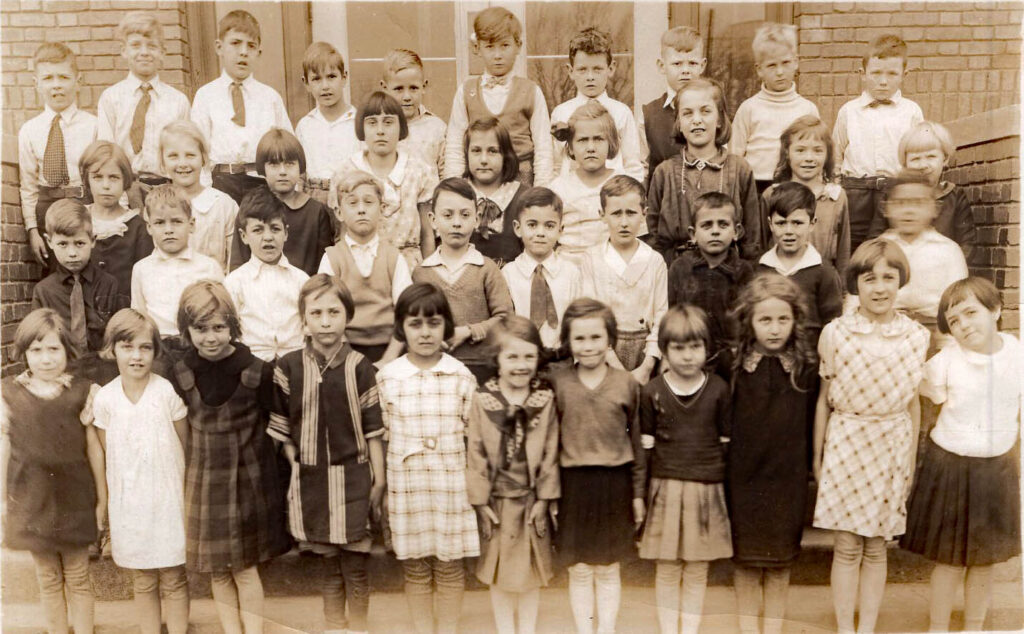
I suspect that the picture is of the 2nd and 3rd grade students that year. Jack is in the 3rd grade and Marguerite is in the 2nd grade.
Jack’s First Communion was on May 19, 1935 and his Confirmation was on May 14, 1939.
While growing up, Jack worked at White Bear Oil Company in the summertime and by the time he was 13 years old he drove truck on the city roads, something he had taught himself in the backyard of the family home.
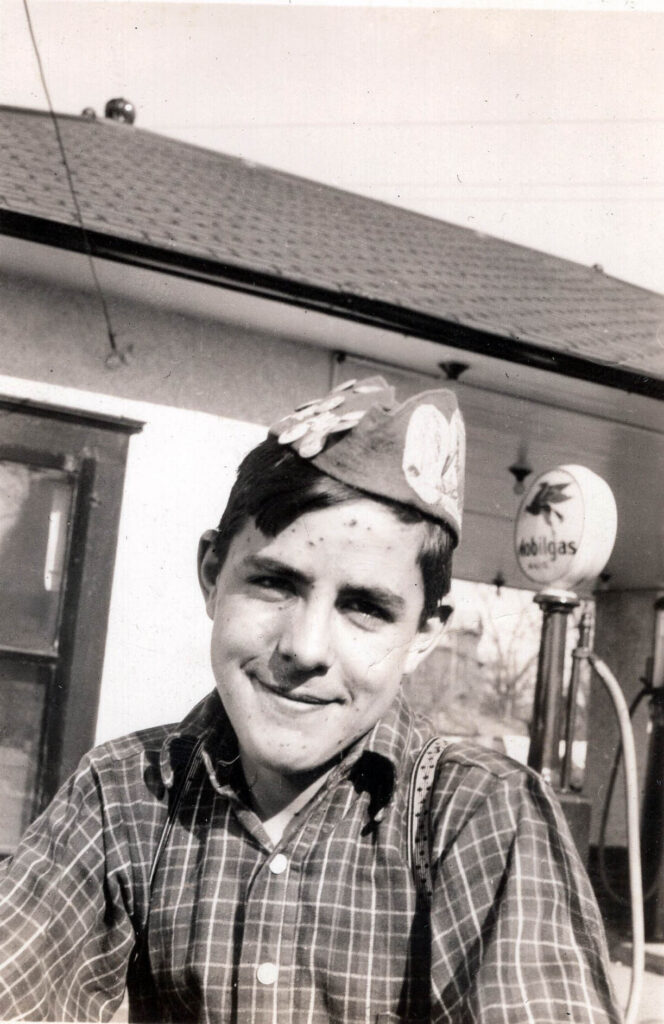
He’s around 12 years old.
Jack often told a particular story, especially when we were driving on E. Highway 96 from Highway 61 going over the swamp area before Ramsey Beach. He said that when he was young, at night in the summertime when it was hot, he would take a burlap sack and go to the road (Highway 96) dividing the swamp areas. The road would be covered in frogs, which were put in the sack and brought home for his mother to clean up and serve as a frog leg feast for the family.
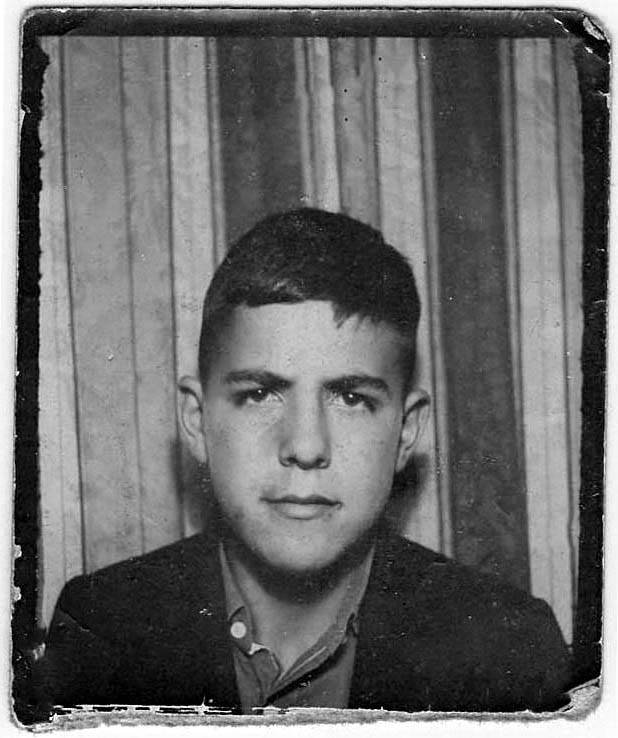
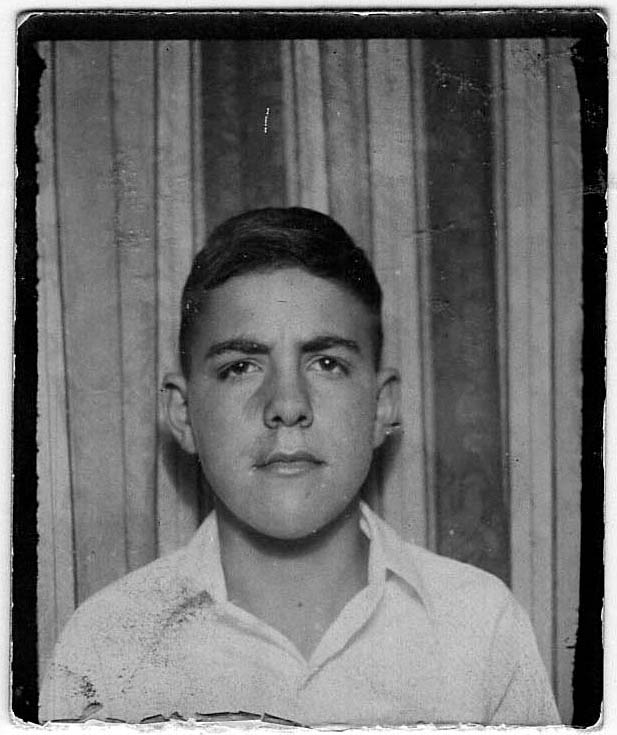
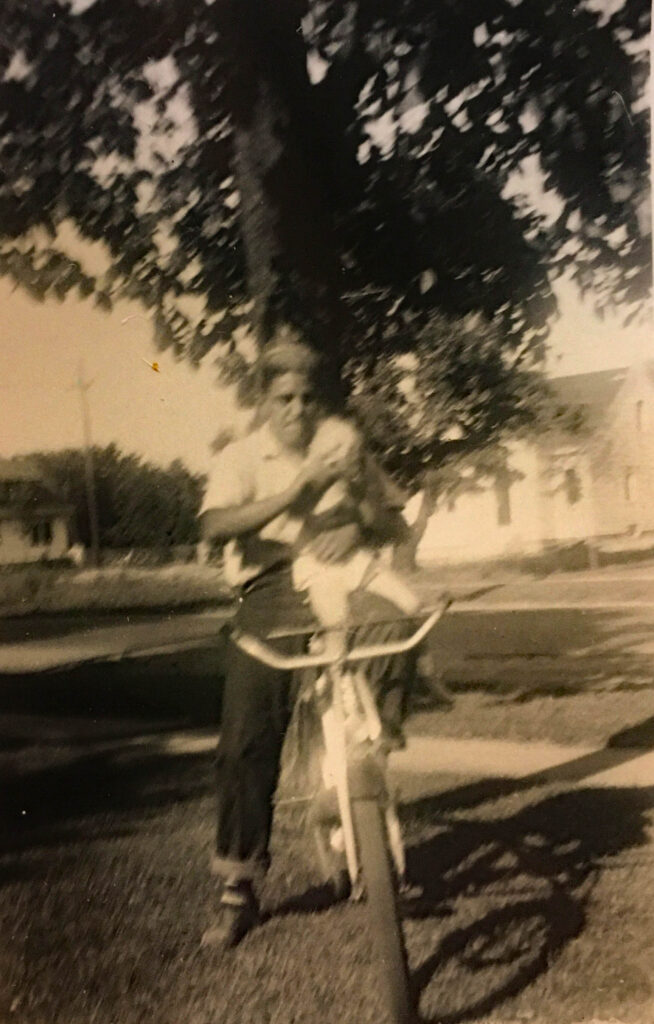
Jack wrote that, “At about 14 my father gave me an aluminum bike, there were only two of these in White Bear, Jack Smith had the other. I never left the bike out; it was taken into the basement every night.”
Over the years, Dad (Jack) talked about the various adventures he had as a young boy. He spoke of the numerous tracks going through White Bear Lake and how quite a few of the side tracks held unused box cars which would be used to play tag; the game involved being on top of the cars, jumping from track to track. In the summer, he swam at the public beach at the end of Clark Avenue. Winter activities included a walk to the beach with skates in hand and then having to change into the ice-cold skates. He said that, “It was a great skate when the lake had frozen over without a snowfall. One time down at the bridge, it was very cold and the ice wasn’t very thick, I fell in and my clothes started to freeze so I couldn’t walk. One of the fellows ran home and got a wagon to haul me home.” He also talked about his favorite pastime, hitching cars, saying that, “The cars would stop at the stop sign and we would hang onto the bumper with our knees against the bumper in a squat, we would go a couple of miles this way, we would be covered with snow. If we happened to get a young fellow, they would really try to shake us off. Sometimes too many of us would hang on one car and it couldn’t get going. Thankfully there weren’t many cars on the road in those days.” He also mentioned how the kids in the neighborhood would often get together and, depending on the season, they’d play hockey or baseball in the street.
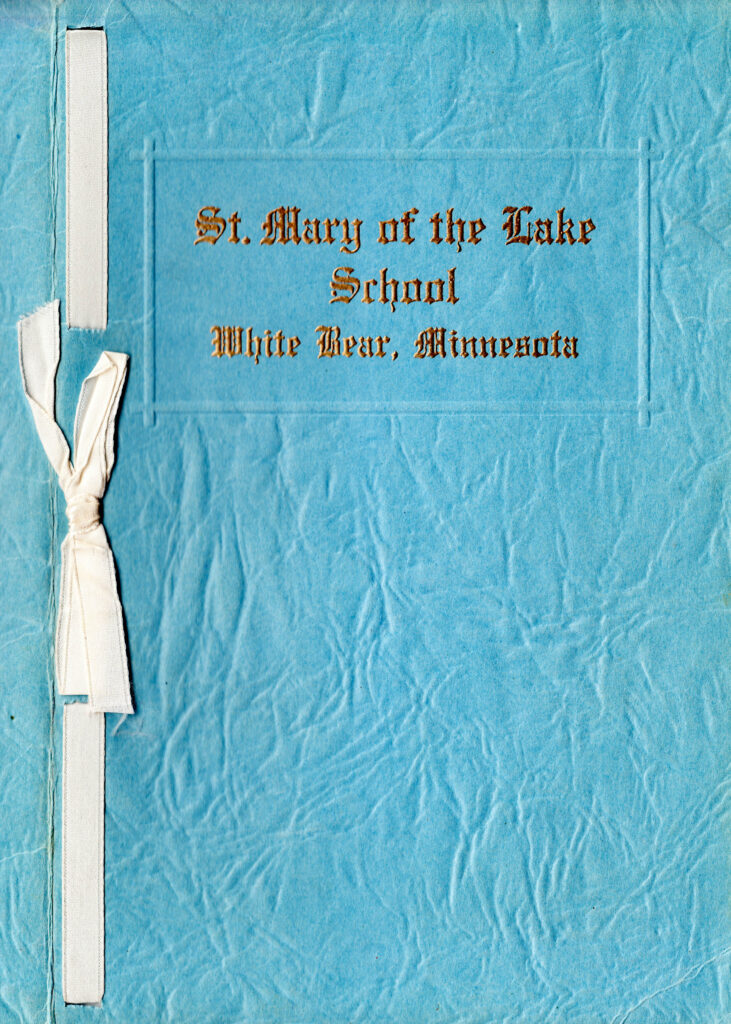
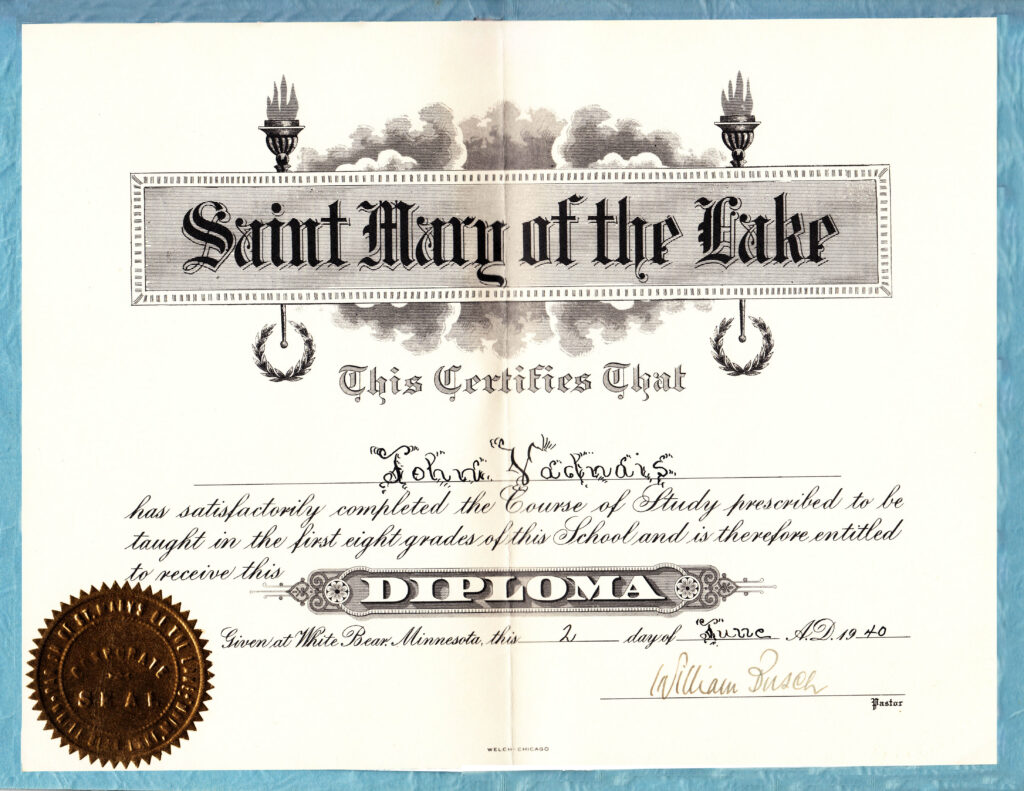
In 1940, 15 year old Jack graduated from the 8th grade at St. Mary’s School.
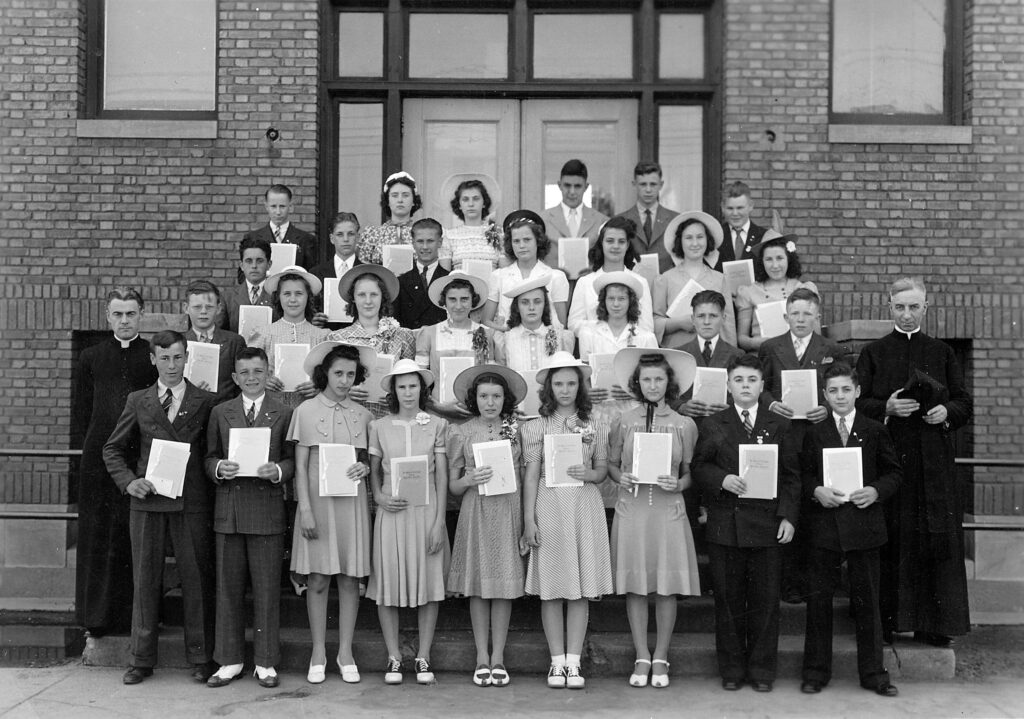
Jack is in the top row, third from the right. Father Lawrence Ryan (left) and Father William Busch (right) are shown with the class.
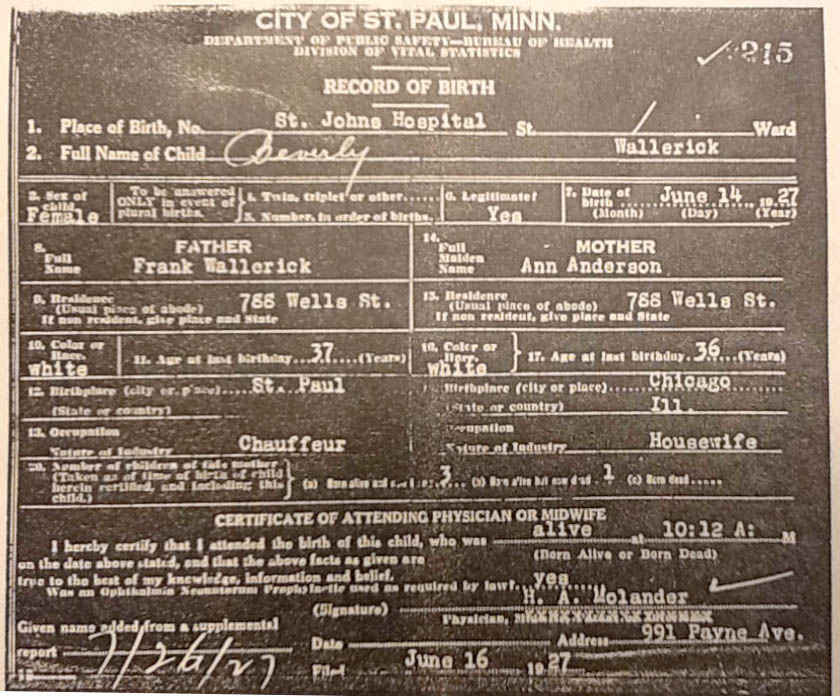
Jack’s future wife, my mother, Beverly Ann (Bev) Wallerick, the third of four children, was born to Ann (Anderson) and Frank Wallerick on June 14, 1927 at St. John’s Hospital in St. Paul, Minnesota; both Ann and Frank were 37 years old when Bev was born.5 Bev’s oldest sister Beatrice Ann had died shortly after being born, Bev’s sister Leora June was 5 years old when Bev was born and her only brother, Lambert (Bert), was born in 1931 when Bev was almost 4 years old.
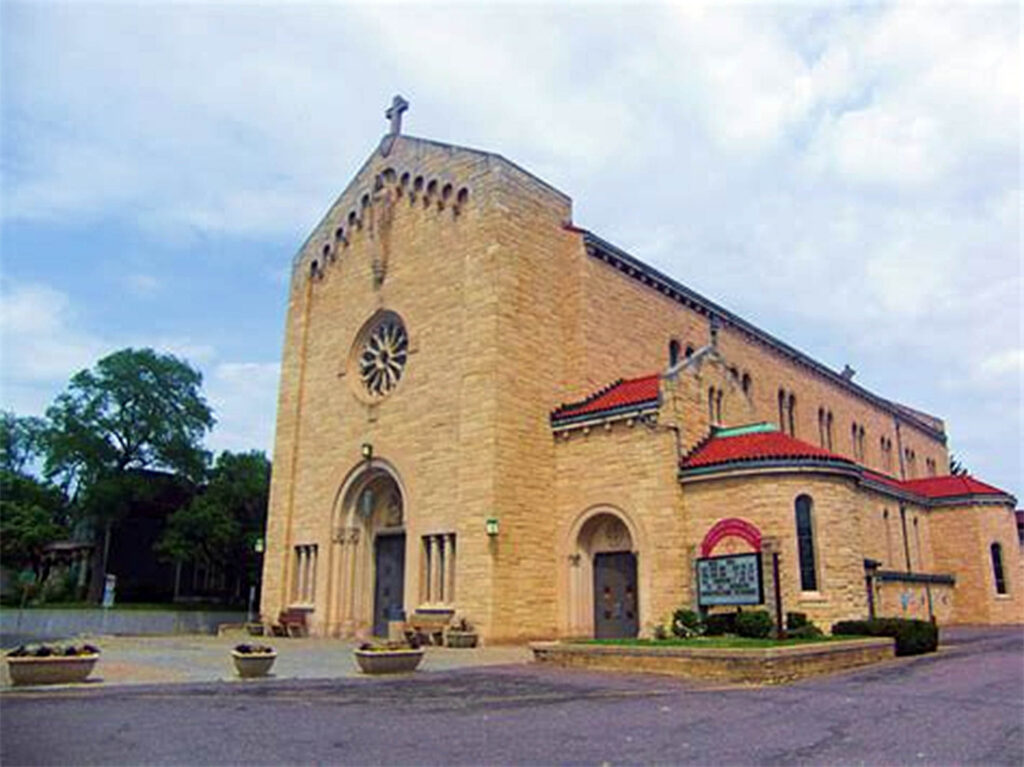
Bev was baptized at Sacred Heart Catholic Church located at the end of Arcade Street and Sixth Street in St. Paul; a short walk from the family home on Wells Street.
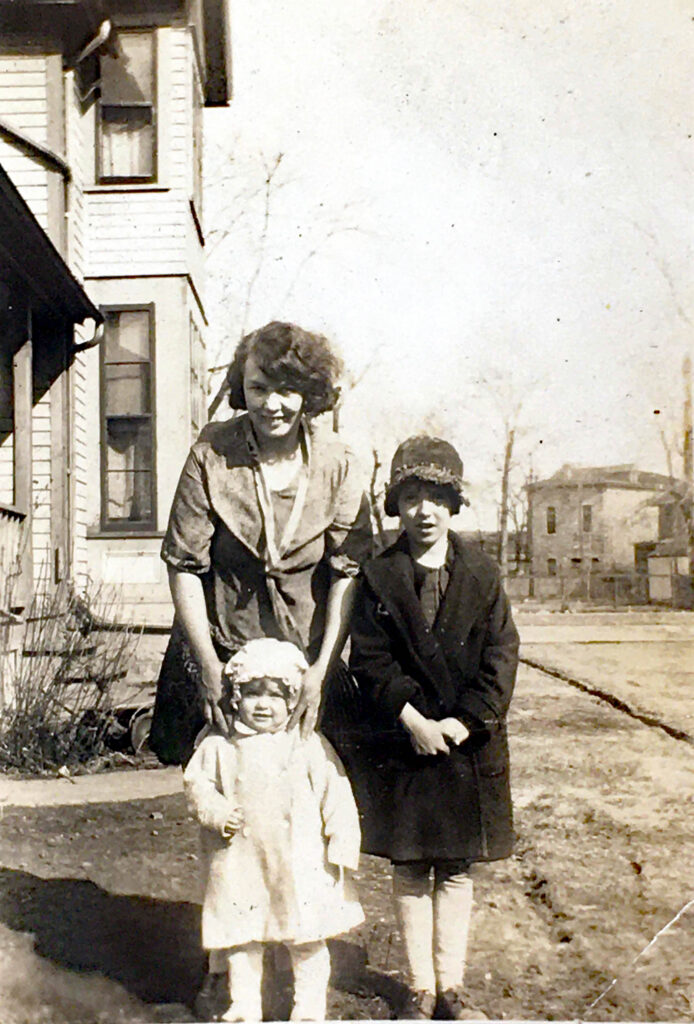
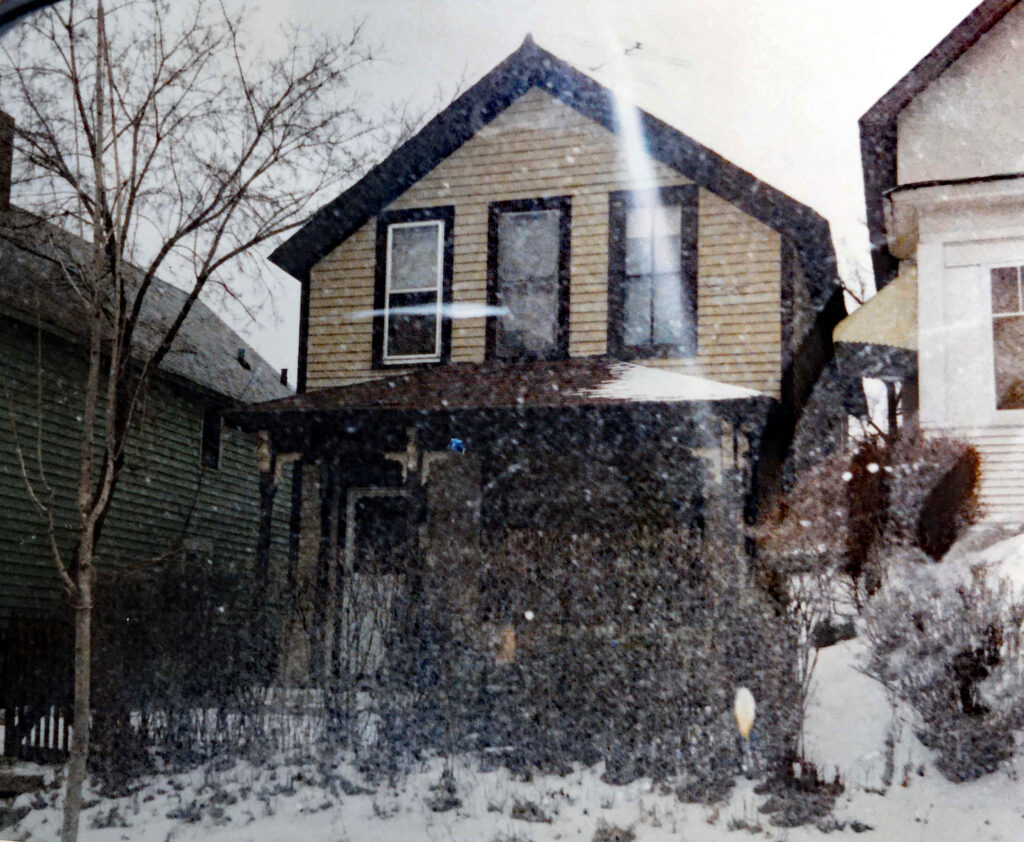
Bev grew up on the East side of St. Paul at 788 Wells, a short distance off of Arcade Street. The 2-story, 2-bedroom home was built in the late 1800s.
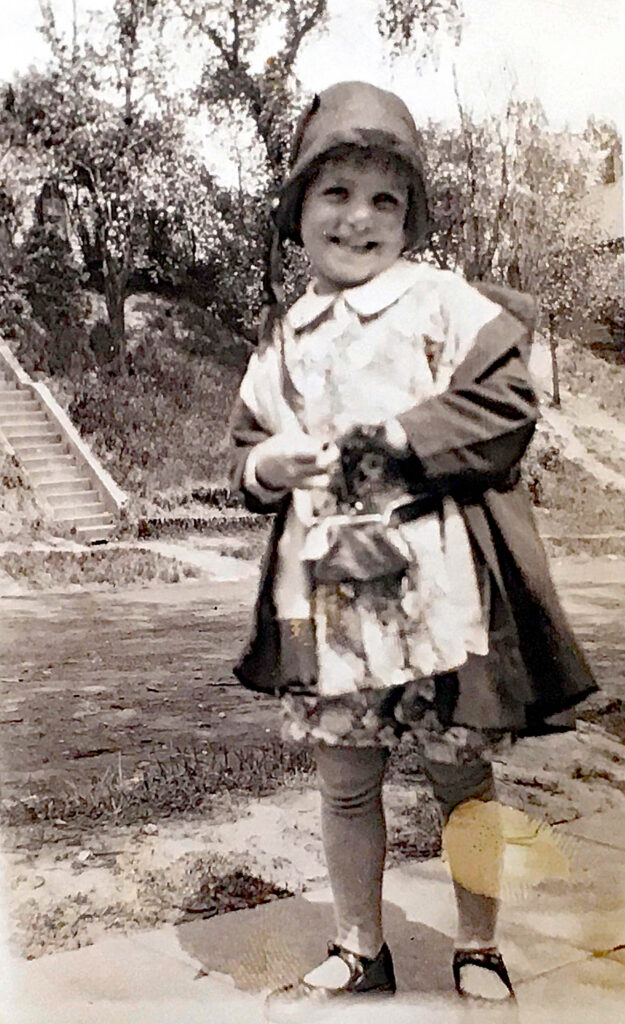
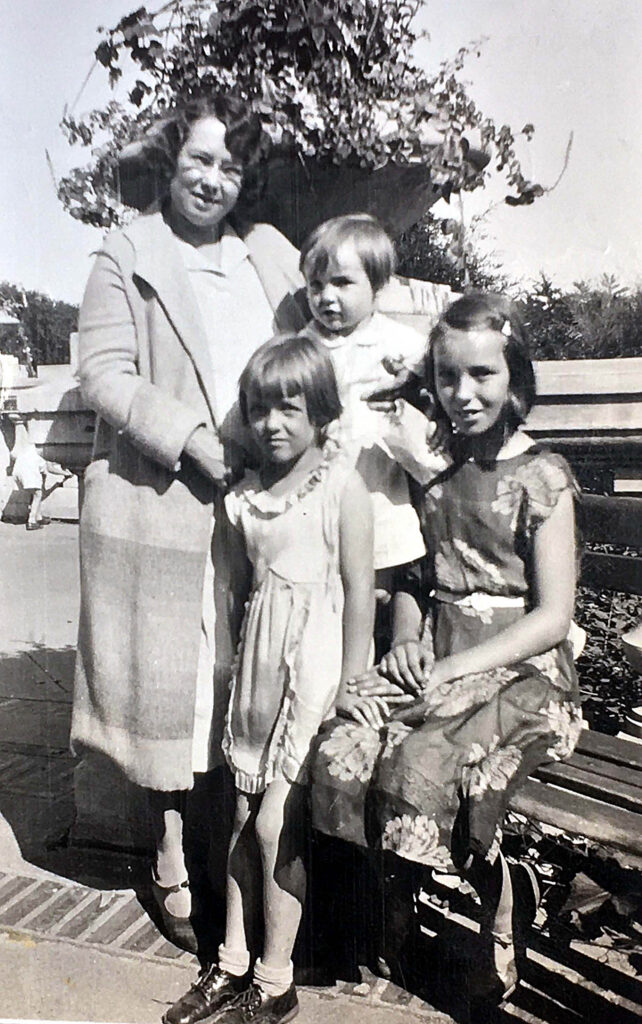
Bev was 6 years old when she began her education at Sacred Heart Catholic School in the fall of 1933. Like St. Mary’s School in White Bear Lake, the school offered 8 years of Catholic education.
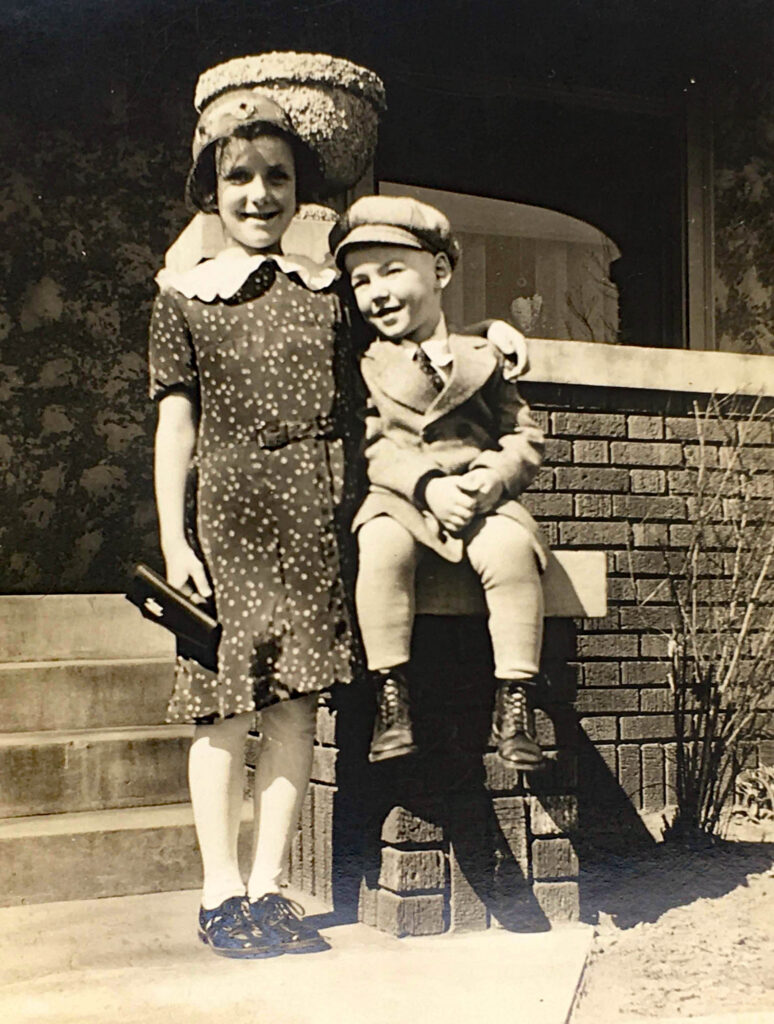
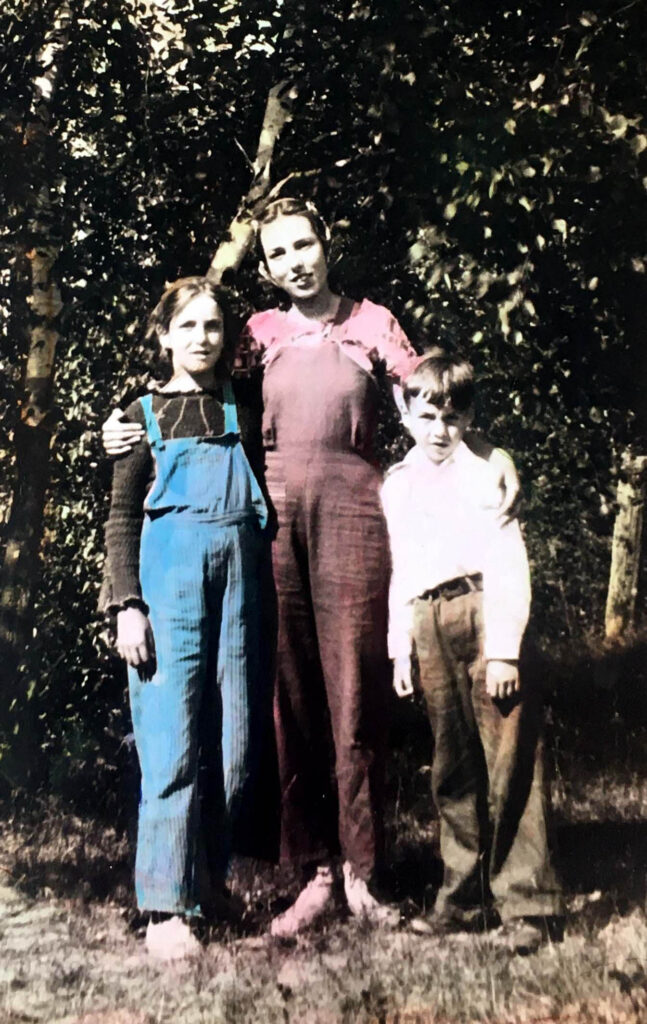
They are outside their Aunt Emma Peterson’s home at 717 Margaret Avenue in St. Paul
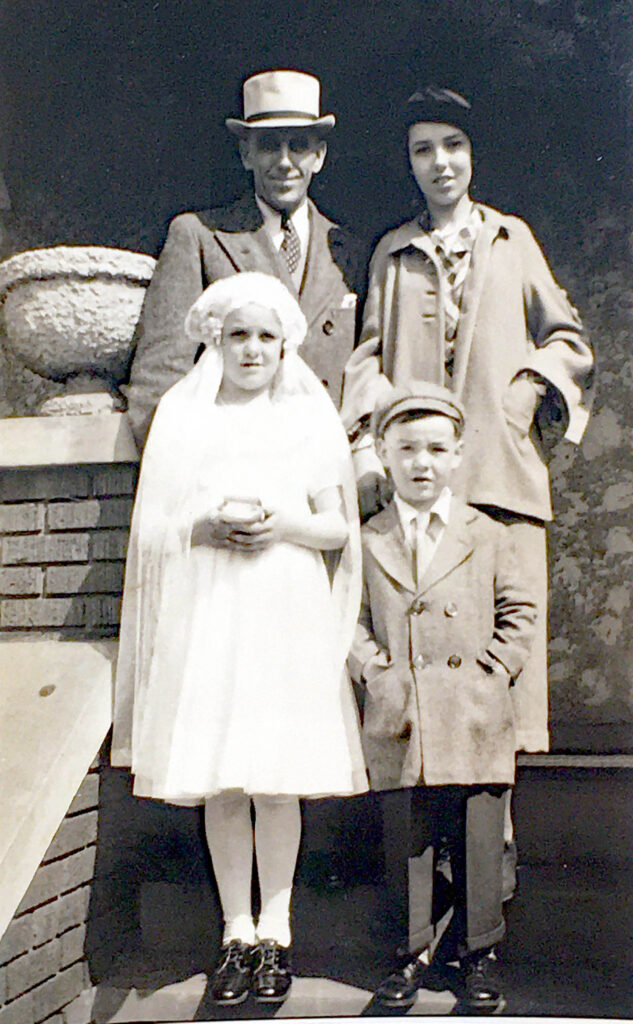
Shown with Bev are her father Frank, her sister Leora June and her younger brother Bert. Bev was 8 years old.
Bev is in the back row, 4th from the left.
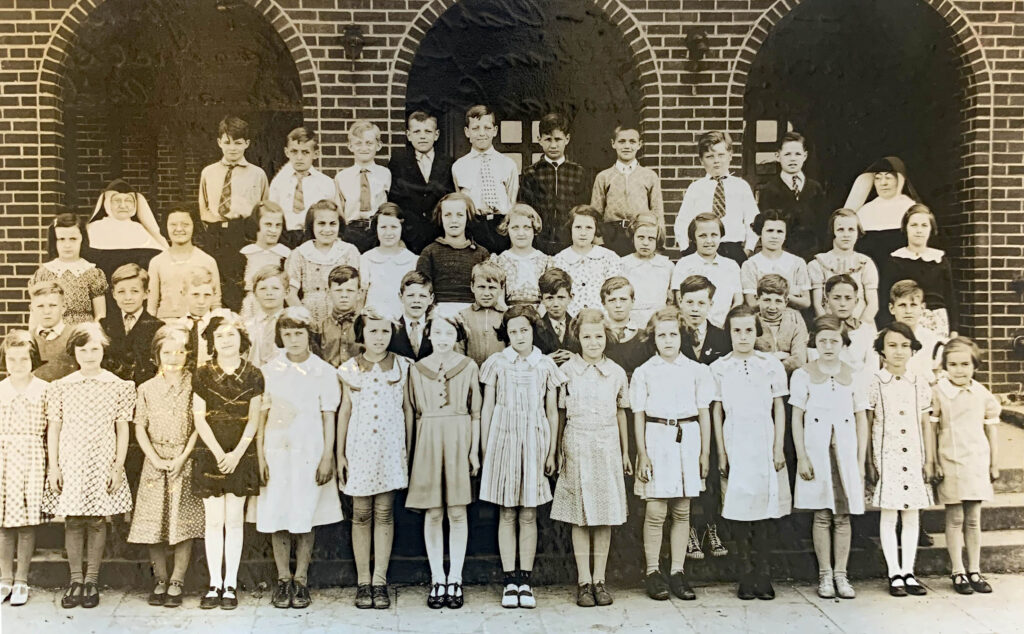
Bev is in the third row, 8th from the right.
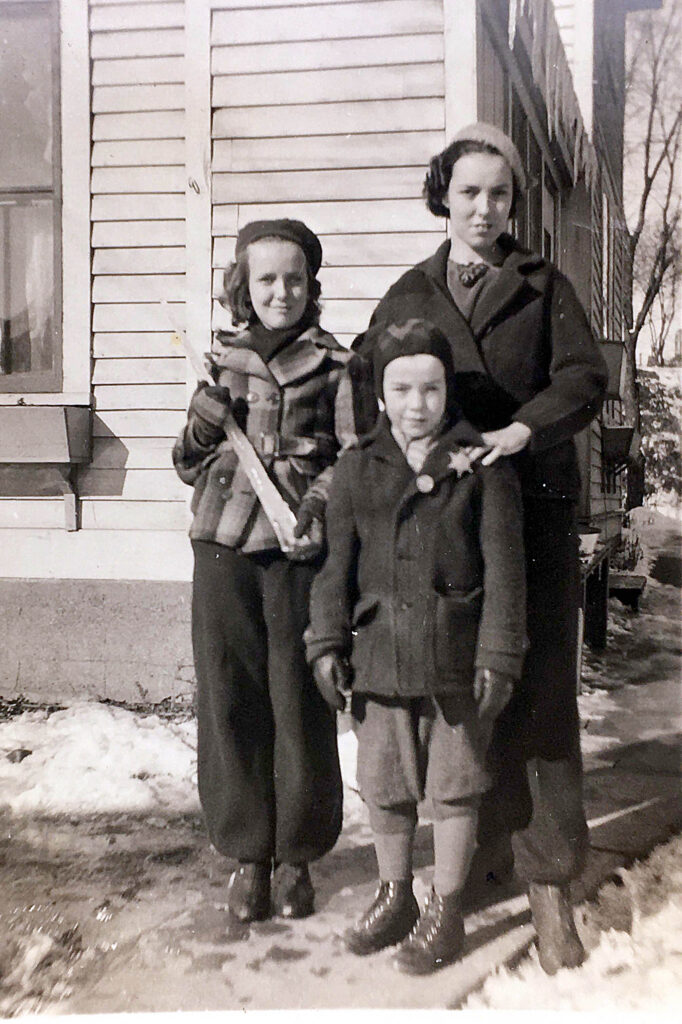
Bev is holding an icicle that she probably broke off of the house.
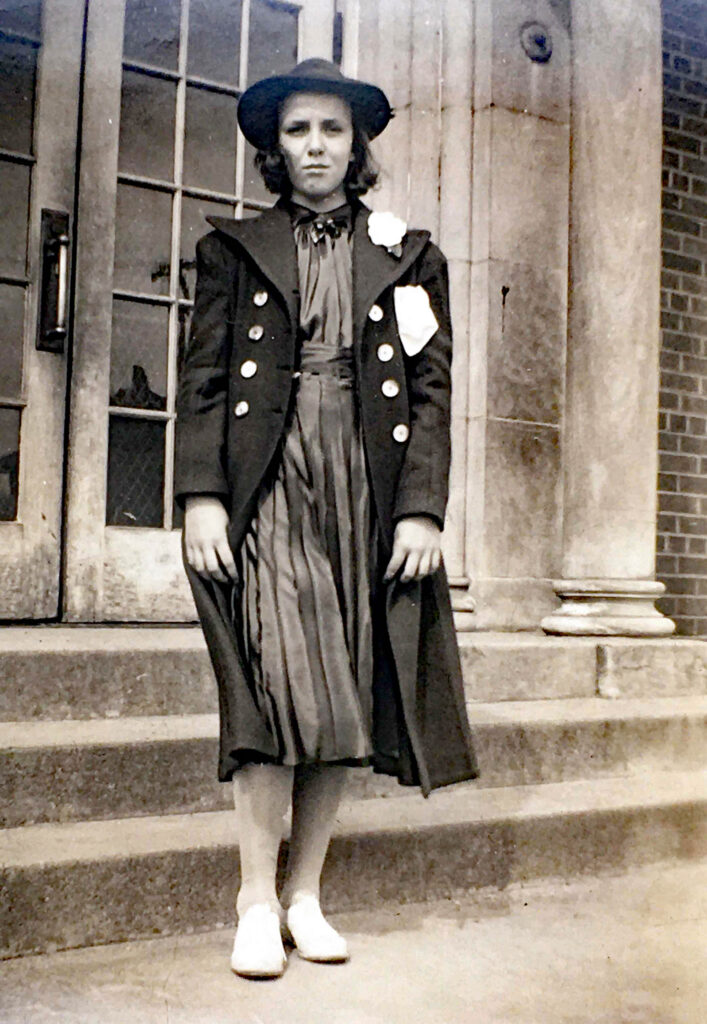
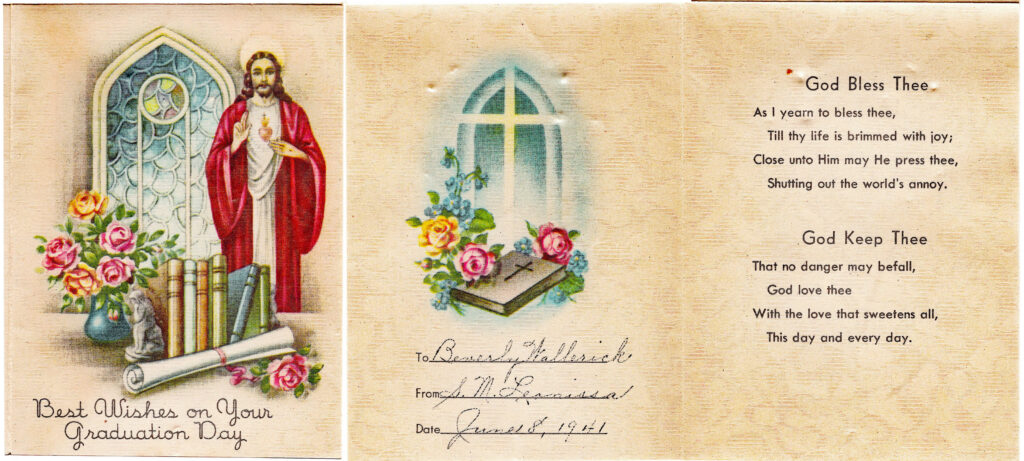
Bev graduated from the 8th grade at Sacred Heart Catholic School on June 8, 1941. Her education was accelerated when she skipped the 6th grade.
To be continued…
Thanks for visiting, come back soon,
Cynthia
© 2026 Copyright by Cynthia Vadnais, All Rights Reserved
Footnotes for John Russell (Jack) Vadnais and Beverly Ann (Bev) Wallerick (part 1) post
John Russell (Jack) Vadnais and Beverly Ann (Bev) Wallerick (part 1) Read More »